Why Is My Garage Floor Coating Peeling? Common Causes and Solutions
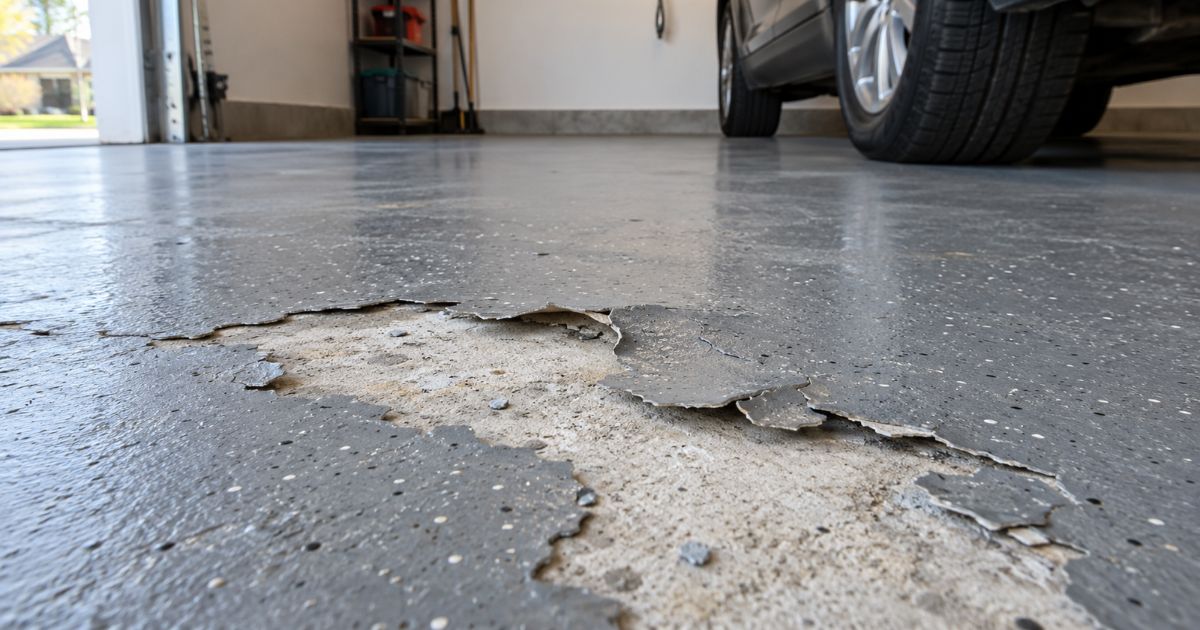
A garage floor coating should provide an attractive, protective surface that withstands everyday use. However, peeling, flaking, or lifting can leave homeowners wondering why their flooring is deteriorating and whether the damage can be repaired.
Garage floor coating peeling often occurs when the coating loses adhesion to the concrete or when the underlying surface begins to deteriorate. Inadequate preparation, trapped moisture, contamination, and application conditions can all contribute to these problems. For Indianapolis homeowners, seasonal moisture and road salt also create conditions worth considering when evaluating garage flooring.
Understanding why coatings fail can help homeowners recognize early warning signs and make informed repair decisions. This guide explains the common causes of peeling garage floor coatings, available repair approaches, and steps that can help reduce the likelihood of future problems.
Understanding Why Garage Floor Coatings Peel
Garage floor coatings are designed to bond with a properly prepared concrete surface, forming a protective finish that helps resist everyday wear. Depending on the system, the flooring may contain epoxy, polyurea, polyaspartic, or other compatible coating materials.
Peeling occurs when that bond becomes compromised or when one coating layer separates from another. The damage may begin as a small lifted edge before spreading across a larger section of flooring.
What Does Coating Failure Look Like?
Coating problems do not always appear the same. Common warning signs include:
-
Peeling: Sections of coating lift away from the concrete.
-
Flaking: Small pieces detach, often around damaged areas.
-
Blistering: Raised bubbles develop beneath the coating.
-
Delamination: Coating layers separate from each other or the substrate.
-
Cracking: Fractures appear in the coating, sometimes reflecting movement in the concrete.
Identifying these differences helps determine whether the problem involves adhesion, surface deterioration, moisture, or physical damage.
Common Causes of Garage Floor Coating Peeling
Several factors can contribute to premature coating failure. Understanding the conditions beneath the coating is essential because repairing visible damage without addressing its cause may lead to recurring problems.
Inadequate surface preparation, excess moisture, contamination, and improper application can weaken coating adhesion. Identifying these issues helps homeowners understand the damage and determine appropriate repair options.
1. Inadequate Concrete Surface Preparation
Poor surface preparation is a significant contributor to coating adhesion problems. Concrete may contain dust, surface laitance, existing sealers, or smooth areas that interfere with bonding.
Professional preparation often involves mechanical grinding or other appropriate methods to remove unsuitable surface material and establish the profile required by the selected coating.
According to the Association for Materials Protection and Performance (AMPP), proper concrete surface preparation is essential for coating adhesion. Contaminants, damaged concrete, and an unsuitable surface profile can interfere with bonding and contribute to premature coating failure.
A coating applied over an unsuitable concrete surface may peel even when the coating material itself is not defective.
2. Excess Moisture Within the Concrete
Concrete can contain moisture that is not immediately visible. When moisture moves through a slab, it may interfere with adhesion or contribute to pressure-related blistering beneath certain coating systems.
Moisture-related problems can occur when:
-
The slab contains excessive internal moisture.
-
Ground moisture migrates through the concrete.
-
Water or condensation affects the surface during installation.
-
The coating system is incompatible with existing moisture conditions.
The American Concrete Institute’s guidance on moisture-sensitive flooring addresses moisture movement, moisture testing, and conditions that can affect flooring performance. Evaluating these factors before installation helps contractors determine whether additional moisture testing or mitigation may be necessary.
Moisture testing and the manufacturer’s specified limits help determine whether the concrete is suitable for the proposed installation.
3. Oil, Grease, and Surface Contamination
Garages frequently experience exposure to vehicle fluids, cleaning products, dirt, and other contaminants. Oil and grease can penetrate porous concrete and interfere with the adhesion of newly applied coatings.
A surface may appear clean while still containing residues that affect bonding.
Before coating installation, contaminants must be evaluated and removed using methods appropriate for the concrete and selected flooring system. Simply washing the floor may not adequately address deeply embedded contamination.
4. Incorrect Application or Curing Conditions
Coating products have specific requirements for application temperatures, humidity, mixing, and curing. Ignoring these requirements can affect adhesion and overall performance.
Problems may develop when materials are mixed incorrectly, applied outside manufacturer guidelines, or exposed to unsuitable environmental conditions.
Applying another layer outside the specified recoat window without appropriate preparation can also interfere with bonding between layers.
Professional installers should follow the technical instructions for the actual coating system rather than assuming every product has identical application requirements.
5. Wear, Impact, and Unsuitable Coating Selection
Garage flooring experiences repeated vehicle movement, foot traffic, equipment storage, and occasional impacts.
Some coatings are not designed for the level of mechanical wear or chemical exposure present in a particular garage. Localized damage may also develop where heavy objects strike the surface or equipment is dragged across it.
Heat from vehicle tires, repeated loading, and abrasive debris can contribute to deterioration depending on the coating’s formulation and installation quality.
Selecting a flooring system appropriate for the garage’s intended use is therefore important.
How Indiana Weather Can Affect Garage Floor Coatings
Indianapolis garages experience changing temperatures, winter moisture, and materials tracked indoors from roads and driveways. These conditions can contribute to coating wear, particularly when the concrete surface has existing damage or adhesion problems.
Understanding how seasonal weather affects garage flooring helps homeowners recognize potential risks and maintain their coated surfaces more effectively.
Winter Moisture and Road Salt
During winter, vehicles can carry snow, slush, and deicing materials into garages. These deposits introduce moisture and residues that require regular cleaning.
Although an appropriate coating system can help protect concrete from some forms of surface exposure, its performance depends on product specifications, adhesion, and maintenance.
Temperature Changes and Concrete Movement
Concrete slabs naturally respond to temperature changes and loading. Existing cracks or joints may experience movement that affects a coating applied across them.
Not every visible crack indicates coating failure. However, cracking accompanied by lifting or separation deserves closer evaluation.
Homeowners should distinguish normal surface wear from conditions involving moisture, substrate deterioration, or movement.
Can a Peeling Garage Floor Coating Be Repaired?
A peeling coating does not automatically mean the entire floor needs replacement. The appropriate solution depends on the extent of the damage and whether the surrounding coating remains properly bonded.
Minor peeling may be addressed through localized repairs, while widespread damage could require more extensive coating removal or replacement. Identifying the underlying cause helps determine the most suitable repair approach and reduce the risk of recurring problems.
Localized Repairs
When peeling is limited to a small area, a professional may determine that localized repairs are appropriate.
The process can involve removing loose material, evaluating the exposed concrete, preparing the affected area, and applying compatible repair materials.
However, the replacement coating must be compatible with the existing system. Surface preparation and adhesion requirements remain important even for small repairs.
Extensive Coating Removal and Replacement
Widespread peeling, recurring blistering, or poor adhesion across multiple areas may indicate a more significant problem.
In these situations, removing the failing coating and evaluating the concrete before installing a replacement system may provide a more appropriate solution.
A professional assessment helps determine whether the existing coating can remain in place or whether removal is necessary.
For homeowners considering replacement, Fórte Surfaces provides professional garage floor coating services in Indianapolis, including decorative coating options for residential garages.
How Professionals Evaluate and Address Coating Failure
A proper repair begins with identifying why the original coating failed. Applying another coating over damaged material without evaluating the underlying conditions can allow the problem to return.
Professional evaluation typically involves inspecting the existing coating, assessing the concrete substrate, and identifying moisture or adhesion issues. These findings help determine the appropriate surface preparation, repair methods, and coating system based on the concrete’s condition and intended use.
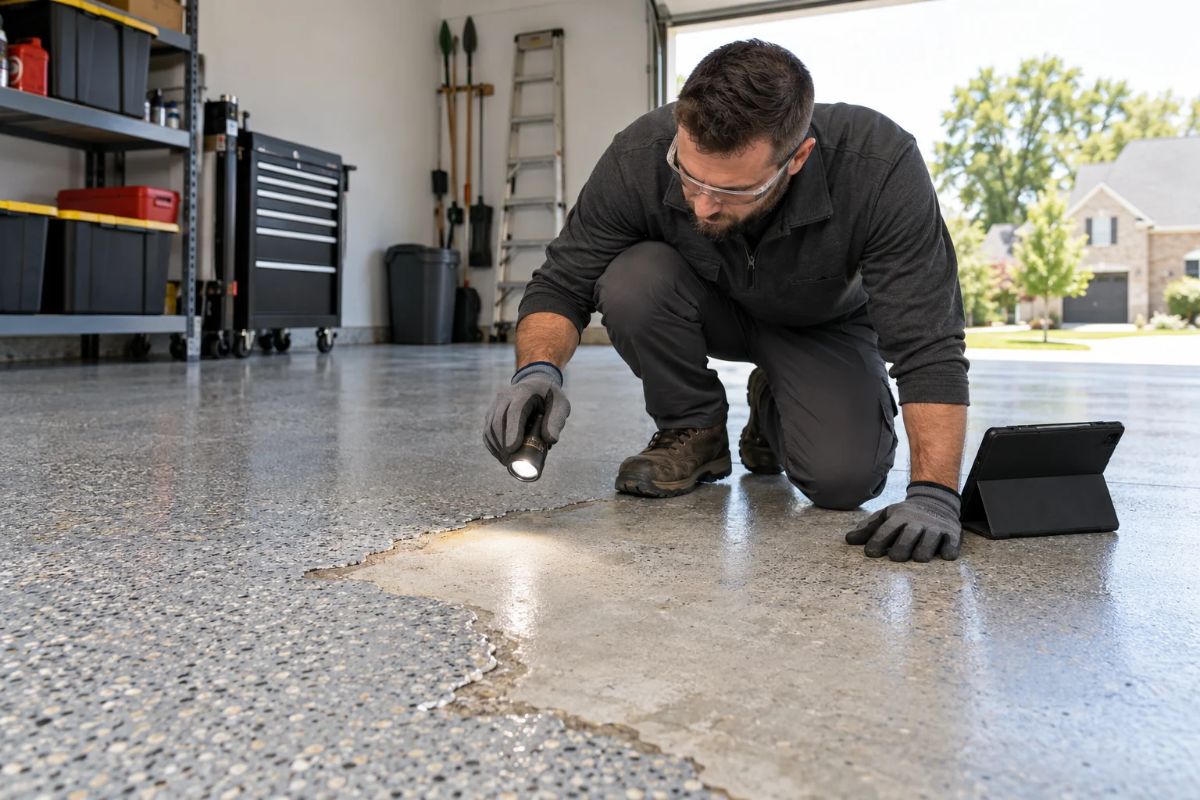
Step 1: Inspect the Existing Coating
The contractor examines peeling patterns, cracks, blisters, surface deterioration, and areas where the coating remains attached.
This initial evaluation helps identify whether the damage appears localized or widespread.
Step 2: Assess the Concrete Substrate
The exposed concrete may need evaluation for contamination, moisture, deterioration, and other conditions affecting adhesion.
Testing requirements depend on the selected system and the manufacturer’s installation specifications.
Step 3: Prepare and Repair the Surface
Unsound coatings and incompatible materials are removed as necessary. The contractor then prepares the concrete and addresses suitable repair areas before proceeding.
Existing cracks and joints require appropriate treatment based on their condition and expected movement.
Step 4: Apply the Selected Coating System
Once substrate requirements are satisfied, the chosen coating system is installed according to its technical specifications.
Fórte Surfaces offers residential coating solutions that include epoxy and other specialty materials. Homeowners can learn more about its residential surface and coating services.
Installation timing and return-to-service requirements vary according to the materials, site conditions, and project scope.
How to Help Prevent Garage Floor Coating Peeling
Although no coating is immune to damage, suitable installation practices and maintenance can help reduce avoidable deterioration. Proper concrete preparation, appropriate coating selection, and correct application techniques all contribute to long-term performance.
Regular cleaning and timely attention to minor damage can also help preserve the coating’s condition and reduce the risk of premature wear.
Prioritize Proper Installation
Before selecting a coating system, homeowners should discuss concrete condition, moisture evaluation, surface preparation, and intended garage use with their contractor.
The installation process should follow manufacturer requirements instead of relying on appearance alone.
Maintain the Finished Surface
Practical maintenance habits include:
-
Sweeping away abrasive dirt and debris.
-
Cleaning spills using products compatible with the coating.
-
Removing accumulated winter slush and road salt.
-
Avoiding unnecessary dragging of sharp or heavy equipment.
-
Inspecting damaged areas before deterioration spreads.
For additional maintenance advice, read Fórte Surfaces’ guide to maintaining epoxy floors.
Regular care does not correct an underlying adhesion problem, but it can help preserve an otherwise sound coating.
Choosing the Right Solution for Your Garage
A peeling garage floor can result from several different conditions, so the best response depends on the cause rather than appearance alone.
|
Floor condition |
Appropriate next step |
|
Small isolated peeling area |
Evaluate for a compatible localized repair |
|
Recurring bubbles or blistering |
Investigate possible moisture and adhesion problems |
|
Widespread lifting |
Assess whether coating removal is necessary |
|
Cracks with coating separation |
Evaluate concrete condition and movement |
|
Repeated coating failure |
Review substrate preparation and system suitability |
Homeowners should avoid assuming that applying another layer will permanently solve the problem.
A qualified contractor can evaluate the existing floor and explain which repair or replacement options are technically appropriate.
Final Thoughts
Garage floor coating peeling can develop from inadequate preparation, moisture, contamination, installation errors, or unsuitable coating selection. Determining the underlying cause is essential before deciding whether a localized repair or complete replacement is appropriate.
For Indianapolis homeowners, understanding the condition of the concrete and the demands of daily garage use can make flooring decisions more informed.
Fórte Surfaces provides garage floor coating solutions throughout Greater Indianapolis. Homeowners experiencing coating deterioration can request a free estimate from Fórte Surfaces to discuss their garage flooring needs and explore suitable coating options.
Frequently Asked Questions
Why is my epoxy garage floor peeling?
Epoxy flooring may peel because of inadequate concrete preparation, moisture, contamination, unsuitable application conditions, or physical wear. The exact cause requires evaluating the coating and substrate.
Can I apply a new coating over peeling epoxy?
Applying a new coating directly over loose or poorly bonded epoxy is generally inappropriate. Failing material must be addressed, and any remaining coating needs to meet compatibility and adhesion requirements.
Does moisture cause garage floor coatings to peel?
Yes. Excessive moisture can contribute to blistering, adhesion loss, and delamination in susceptible coating systems. Appropriate testing helps determine whether moisture is a contributing factor.
Can a small peeling area be repaired?
Some localized damage may be repairable when surrounding material remains sound and a compatible repair method is available. Widespread adhesion failure may require more extensive work.
How can I prevent my garage floor coating from peeling again?
Start with a properly evaluated concrete slab, appropriate surface preparation, compatible coating materials, and manufacturer-compliant installation. Routine cleaning and prompt attention to damage also support long-term maintenance.